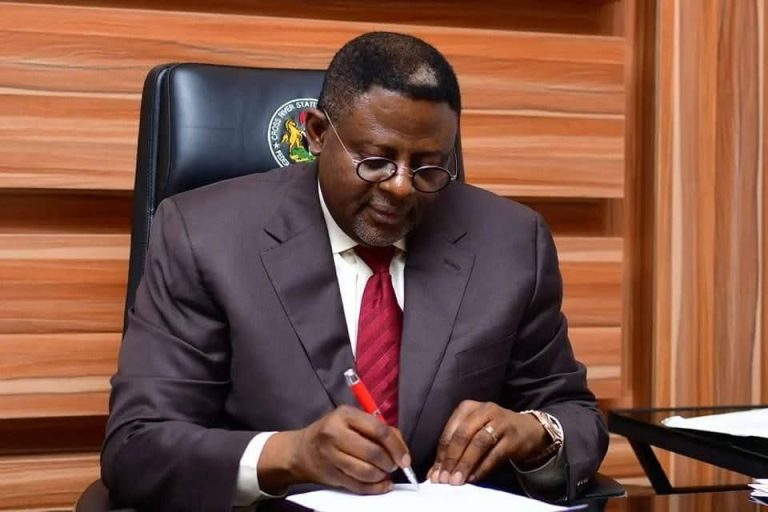
Cross River State Governor, Senator Bassey Edet Otu, has officially flagged off the development of the state’s maiden Climate Transition Plan, reaffirming his administration’s commitment to environmental sustainability, climate resilience and the development of a green economy.
The flag-off was performed at the inaugural workshop for the development of the plan held in Calabar. Governor Otu, who is Chairman of the State Council on Climate Change, was represented at the event by the Speaker of the Cross River State House of Assembly, Rt. Hon. Chief Elvert Ayambem.
In his address, Governor Otu described climate change as an urgent economic, environmental and developmental challenge that requires deliberate action, stressing that Cross River State must strengthen its response to emerging climate risks while maximising opportunities in the global green economy.
“Climate change is no longer a distant theoretical concern. It is an urgent economic, environmental, and developmental reality,” the Governor stated.
He noted that Cross River occupies a strategic position in Nigeria’s environmental conservation efforts, with more than half of the country’s remaining tropical rainforests, alongside invaluable mangrove ecosystems and rich biodiversity. He said this natural endowment places a responsibility on the state to pursue development policies that protect its ecological assets while safeguarding the livelihoods of its people.
Otu explained that the Climate Transition Plan aligns with his administration’s People First agenda and would provide a structured framework for addressing the effects of changing weather patterns, unpredictable agricultural cycles and ecological displacement, while positioning the state to attract green investments and create new economic opportunities.
To establish a credible foundation for the plan, the Governor disclosed that four baseline assessments would be conducted across the state’s 18 local government areas. These include a Greenhouse Gas Inventory Assessment, a Climate Risk and Vulnerability Assessment, a Climate Finance Landscape Assessment and a State Mitigation Strategy Assessment.
According to him, the assessments would establish the state’s emissions profile, identify vulnerable communities and sectors, evaluate opportunities for climate financing and carbon markets, and determine practical strategies for reducing emissions.
The Governor expressed appreciation to Future Funds, the Under2 Coalition and the Climate Group for providing the seed grant to support the assessments. He also acknowledged the contributions of the Food and Agriculture Organization of the United Nations (FAO) and the United Nations Development Programme (UNDP) to the state’s environmental conservation, green development and agro-industrial ambitions.
Emphasising the importance of broad-based participation, Otu called on heads of ministries, departments and agencies, local government chairmen, civil society organisations, community representatives, private-sector operators and financial institutions to contribute actively to the development process.
“The Climate Transition Plan must be locally grounded, evidence-based, and practical. It cannot be developed in isolation,” he said, urging stakeholders to provide relevant data, sector-specific information and community-level insights to ensure that the plan reflects the realities and priorities of Cross River State.
He further stressed the need for private-sector participation and sustainable financing, noting that a successful climate transition would require substantial investment, market-driven innovation and commercially viable solutions.
The Governor also disclosed that the workshop would review and finalise the first-order drafts of the Cross River State Climate Change Policy and Action Plan and the Green Economy Policy and Action Plan. Together with the Climate Transition Plan, the policy instruments are expected to provide a foundation for the state’s green growth strategy.
Declaring the inaugural workshop open, Governor Otu expressed confidence that the initiative would strengthen the state’s climate response and advance its sustainable development priorities.
About The Author